
Why can an AI agent find the right document and still handle the work incorrectly? Often, the missing piece is not information. It is context: what changed, who approved it, which step is complete, and what must happen next.
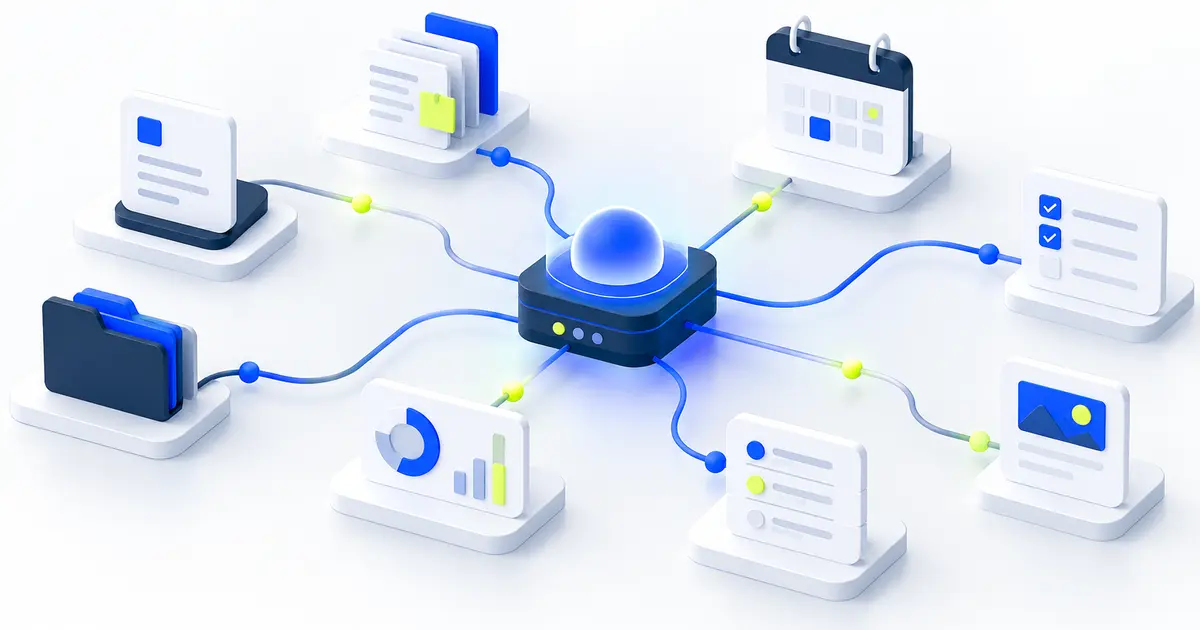
On October 6, 2026, startup Zeroset announced $5.2 million in pre-seed funding and introduced Nebula. The company describes Nebula as a state layer that gives agents current state and workflow history. Business Insider reported that the system connects with tools including Microsoft 365, Outlook, Teams, SharePoint, and GitHub so agents can understand how work evolves across them.
Those are product claims from a young company, not proof that every agent can now understand an organization. My practical reading is narrower: teams should organize the context around a workflow before expecting automation to run it reliably.
A document is not the same as the current state
A policy can explain the official process, but it may not show that a client requested an exception yesterday, a deadline moved, or a manager already approved a change. An agent that sees only the policy may produce a reasonable answer that is wrong for the situation.
For each repeated workflow, I would maintain a small context map with five fields: the desired outcome, the current stage, the named owner, the latest approved decision, and the next allowed action. This creates a shared operational picture without copying an entire company archive into an AI system.
Record decisions, not every conversation
Chat threads and meeting transcripts contain useful signals, but they also contain drafts, disagreement, and sensitive details. Instead of treating every message as truth, capture the decision that resulted: what was decided, by whom, when it takes effect, and where the supporting record lives.
This reduces ambiguity for people as well as agents. It also makes corrections easier. If a decision changes, the team updates one current record rather than hoping the latest message is found among dozens of channels.
Give every automated action a boundary
Context should describe what an agent may do, not only what it knows. A useful boundary can say: draft but do not send; update the internal tracker but not the client system; prepare a recommendation but require approval above a stated amount.
I would also add a freshness rule. If the workflow state has not been confirmed within a defined period, the agent should pause and ask an owner. Stale context can be more dangerous than missing context because it looks authoritative.
Start with one workflow and measure rework
Choose a process with a clear beginning and end, such as candidate screening, client onboarding, or weekly reporting. Map the state fields, decisions, sources, permissions, and human approval points. Then test the agent on real examples and track how often a person must correct, repeat, or reverse its work.
The lesson I take from this announcement is simple: better models alone do not create dependable operations. Agents need maintained context, explicit authority, and a person responsible for the final state.
Sources and further reading
- Zeroset · Nebula and $5.2M funding announcement · October 2026
- Business Insider · Zeroset funding and enterprise-agent context · October 6, 2026
Funding, integrations, and product positioning come from Zeroset and Business Insider. The workflow-context map and operating recommendations are my practical interpretation for teams.
Related: how I structure workflows and handoffs, operations and client support, and more Daily Blogs.