
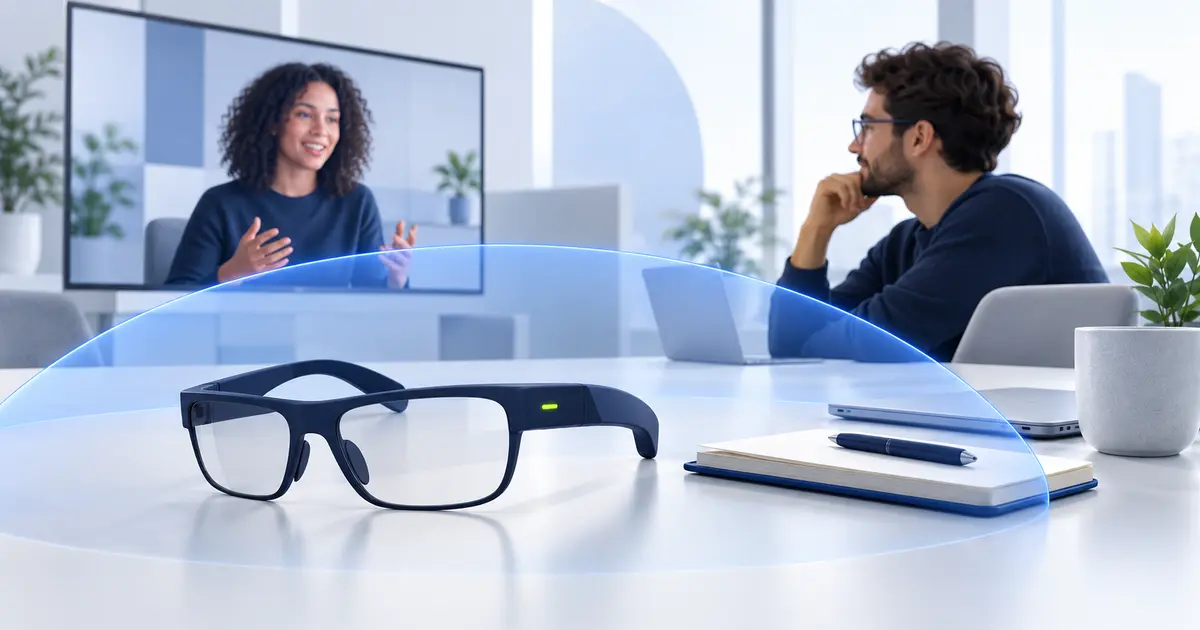
If a colleague joins a meeting wearing AI-enabled glasses, how would everyone know whether audio or video is being captured? Norway’s latest proposal makes that question practical for workplaces, not hypothetical.
On October 5, 2026, Norway’s government said it will bring a proposal to parliament for a temporary ban on AI glasses as quickly as possible. The official announcement says the exact technology and situations covered still need study. It also says an expert group will examine permanent national rules for body-worn technology.
Reuters reported that the concern is people being photographed, filmed, or audio-recorded without knowing. Associated Press added that privacy-sensitive locations could include healthcare facilities and fitness centers with changing areas.
A proposal is not a rule already in force
The Norwegian government has announced its intention to propose legislation. The scope is not final, parliament has not yet enacted the measure, and the announcement is not a worldwide workplace standard. I would not present it to a team as settled law.
Still, it reveals an operational gap. Wearable AI can make recording less visible than opening a laptop tool or placing a phone on the table. A small indicator light may not tell people what is captured, where it goes, or how long it remains available.
Decide consent before the device enters the meeting
My preferred rule is simple: no recording by default. Before capture begins, the user should name the device, explain whether it records audio, video, images, or transcripts, state the purpose, identify who can access the result, and receive clear agreement from everyone affected.
A person should be able to decline without losing access to essential work. Offer written notes or a participant-reviewed summary instead.
Mark sensitive spaces and conversations
Some contexts deserve a stronger boundary: interviews, performance discussions, medical or accommodation conversations, financial records, client-confidential work, legal discussions, and any space where people reasonably expect privacy. I would prohibit wearable capture there unless a documented exception and appropriate approval exist.
In remote work, a camera may capture household members, another screen, or nearby documents. The policy should cover that surrounding environment.
Control the recording after the meeting
Consent is only the first step. Teams should define storage location, access, retention period, deletion responsibility, and whether recordings may be used to train an AI system. A short retention period and named owner are safer than an unlimited archive that nobody reviews.
If accidental capture occurs, pause the device, preserve only what is needed to investigate, notify the affected people, and follow the organization’s privacy or security process. The response should not depend on someone quietly deleting a file and hoping the issue is over.
Include accessibility without creating a loophole
Wearable tools can provide meaningful assistance for people with visual, hearing, memory, or mobility needs. A sensible policy should support documented accessibility use while applying the same principles of notice, minimum necessary collection, secure handling, and respect for others.
My practical takeaway is that a team does not need to wait for a national ban to write a clear rule. Make recording visible, require meaningful consent, protect sensitive contexts, limit retention, and provide a non-recording alternative. That creates trust before the technology becomes ordinary.
Sources and further reading
- Government of Norway · Proposed temporary ban on AI glasses · October 5, 2026
- Reuters · Norway to propose temporary ban on AI glasses in selected places · October 5, 2026
- Associated Press · Privacy concerns put smart glasses under scrutiny · October 5, 2026
The workplace policy suggestions are my practical interpretation, not legal advice or a description of enacted Norwegian law.
Related: how I approach clear team boundaries, operations and client support, and more Daily Blogs.