
If a model is described as open-weight, can a team assume it can move that system whenever a vendor, investor, or product strategy changes? I would not. The weights may be available while the working solution still depends on one runtime, hosting environment, customization process, support team, or commercial license.
Reuters reported on October 10, 2026 that Nvidia was in early-stage talks to deepen its investment in Reflection AI or acquire the company, citing the Financial Times. The FT said possible structures included a full acquisition, additional investment, or an arrangement involving staff and technology licensing. These are reported discussions, not a completed transaction.
Reflection says it develops open-source software for AI stacks that organizations can control and audit, alongside open-weight models, deployment containers, customization recipes, and agent tools. That description is the company’s own. Together, the reporting and the company material raise a useful operations question: what exactly must remain portable if the surrounding business changes?
Inventory more than the model
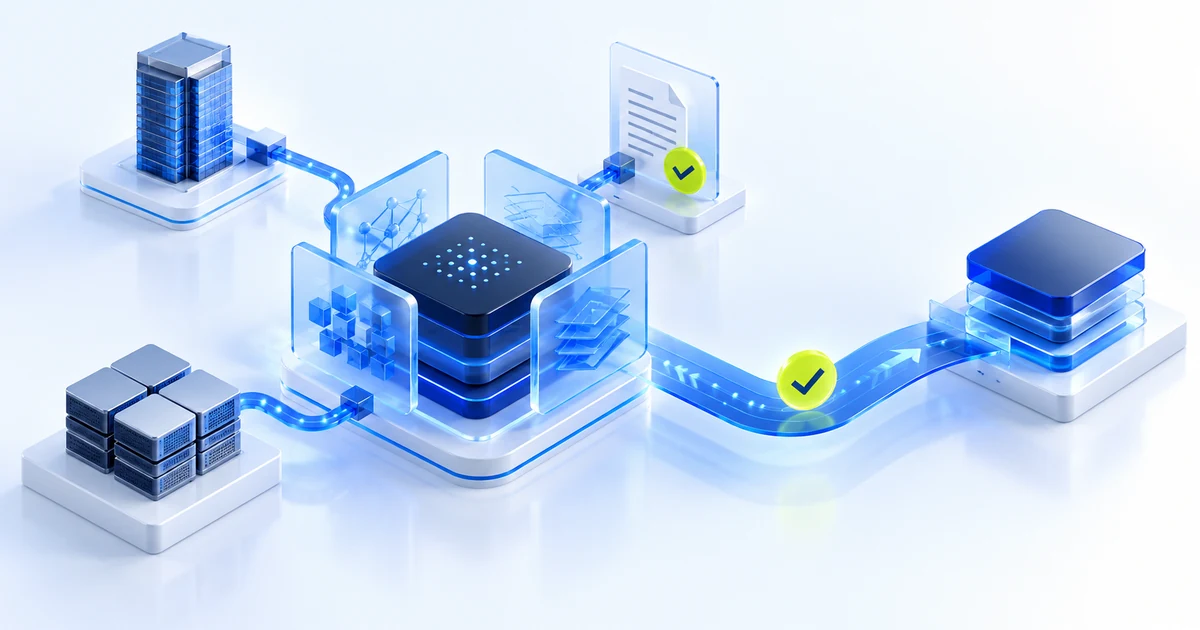
Create one page listing every component required to produce a real result: model weights, license version, inference runtime, orchestration code, prompts, retrieval indexes, evaluation sets, safety filters, monitoring, hardware assumptions, and human review steps. Add the owner and current location for each item.
This exposes dependencies that the phrase “open model” can hide. A downloadable model is not a recoverable service if the team cannot reproduce its environment, retrieve its data, or understand its evaluation threshold.
Read the license for the intended use
Record which rights apply to commercial use, modification, redistribution, fine-tuning, and derived outputs. Save the exact license version reviewed at adoption; do not rely on a product-page summary. If a usage policy also applies to hosted features, document that separately from the model license.
I would assign one person to approve license changes and determine whether a new version affects the existing deployment. Open access is not the same as unrestricted use.
Separate portable assets from hosted conveniences
Mark which assets the organization can export in a documented format: prompts, configurations, fine-tuning data, adapters, embeddings, logs, evaluation results, and user records. Then identify services that may not transfer cleanly, such as proprietary endpoints, managed safety layers, vendor-specific agent tools, or optimized runtimes.
For every non-portable convenience, decide whether the benefit justifies the switching cost. The goal is not to avoid managed services; it is to understand what would need rebuilding.
Maintain a minimum viable replacement
Choose one alternative runtime or model that can handle the most important workflow at reduced capacity. Run the same small evaluation set against it quarterly. Document setup time, output differences, cost, latency, and required human review.
This is similar to a backup process: an untested replacement is only a hope. The fallback does not need feature parity. It needs to keep essential client or internal work moving while the team decides what to do next.
Trigger review when ownership changes
A funding round, acquisition, licensing change, end-of-life notice, major price shift, or support reduction should trigger a short review. Check whether data terms, release cadence, security contacts, deployment rights, or roadmap commitments have changed. Update the risk register and notify the people responsible for affected workflows.
My practical takeaway is that openness is a useful technical property, not a complete continuity plan. Real portability comes from documented dependencies, exportable assets, repeatable evaluations, and a fallback the team has actually tested.
Sources and further reading
- Reuters · Nvidia in talks to invest further in Reflection AI or buy it · October 10, 2026
- Financial Times · Nvidia in talks over Reflection AI · October 10, 2026
- Reflection · Open-weight models and controllable AI stack
- Reflection · Data and training information
The transaction discussions are attributed to Reuters and the Financial Times and may not result in a deal. Reflection’s stack and openness descriptions are company statements. The portability plan is my practical operations framework.
Related: how I document ownership and continuity, turning vendor changes into operating controls, and more Daily Blogs.